

Stand: 20.09.2020
Risk Assessment in Private Health Insurance
Unlike statutory health insurance, private health insurance (PHI) requires a health/risk assessment. This is one of the main reasons why PHI often offers better benefits than GKV and at the same time lower contributions. Whether someone can be insured in PHI is decided by the risk assessors of the insurance companies. Insurers generally aim to accept as many healthy individuals as possible to maintain contribution stability of the collective. High-risk applicants may be declined. Thus, being accepted into PHI is not always straightforward.
What does pre-contractual duty of disclosure mean?
Anyone taking out PHI must answer all health questions truthfully, carefully, and completely. It is recommended to refer to medical records, reports, and findings rather than memory. If the applicant violates the pre-contractual disclosure duty §19 VVG, the insurer may limit benefits. If all questions are answered fully and truthfully, the duty is fulfilled.
The pre-contractual duty of disclosure under §19 Abs 1 VVG requires the applicant to inform the insurer of all relevant risk factors before concluding a PHI contract.
Insurance Options
If health risks are detected during application or assessment, insurers can apply premium surcharges, exclusions, or limitations.
Premium Surcharge
If a pre-existing condition is covered, the insurer may impose a percentage or absolute surcharge, which can reach up to 100% depending on prognosis or condition (e.g., Hashimoto Thyreoiditis, surcharge 17%).
Exclusion of Benefits
Certain health risks or chronic conditions may be excluded from coverage. Cleared or isolated past conditions (e.g., pregnancy, tonsillitis, appendicitis) are usually not excluded.
Benefit Limitations
For example, dental tariffs may have staged limits: 1st year €1,000, 2nd year €2,000, 3rd year €3,000, 4th year €4,000, 5th year €5,000, then unlimited.
Rejection
Risk assessments can result in a rejection or temporary non-insurability. Even minor conditions may be declined based on medical data and insurer experience.
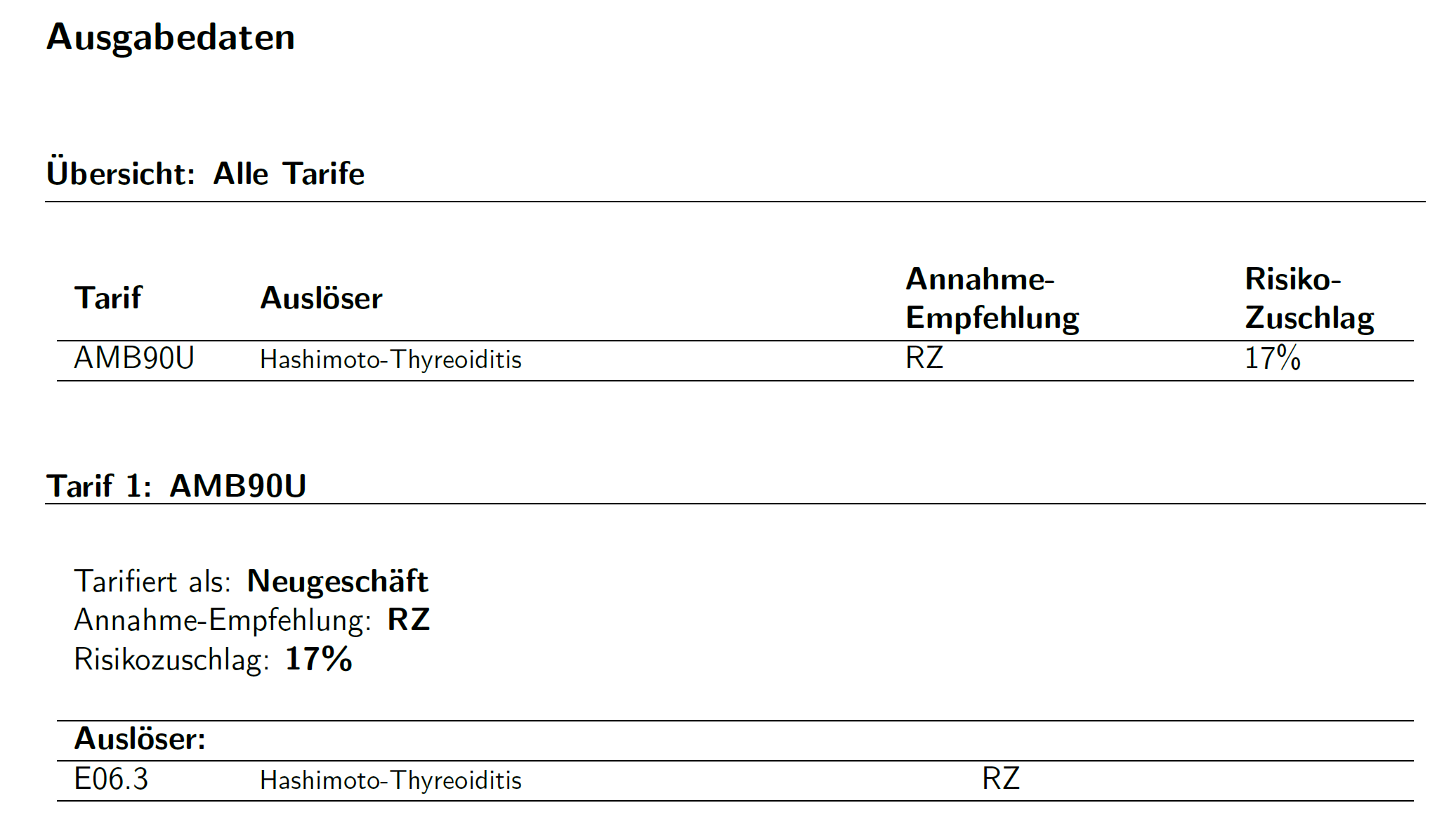
Risk Surcharge by an Insurer
Exclusion of Benefits: Certain medical conditions may be excluded (e.g., chronic illness, allergies) if they increase expected costs.
Benefit Limitation: Some tariffs, e.g., dental, may limit payouts during initial years as a staged amount, then unlimited after.

Example of a rejection letter from an insurer
Most Common Rejection Diagnoses
These diagnoses often lead to a rejection if they currently exist or were treated during the periods asked in the application:
- Doctor visits: last 3 years
- Psychotherapy, surgeries, and hospital stays: last 5-10 years depending on insurer
A
AIDS, Alcoholism, Alzheimer’s Disease, Amyloidosis, Aneurysm, Seizures, Angina Pectoris, Anxiety Disorders, Anorexia, Aplastic Anemia, Stroke, Arterial Occlusion, Arteriosclerosis, Arthritis of major joints, Asthma, Autism
B
Herniated Disc, Pancreas Disease*, Bechterew’s Disease, Leg Length Discrepancy > 3 cm, Hemophilia, Bronchiectasis, Breast Cancer, Bulimia, Bypass Surgery
C
Cancer (all forms)*, Cerebral Sclerosis / Cerebral Seizures, Chronic Inflammatory Bowel Disease, Chronic Gastritis, Chronic Pneumonia, Coxarthrosis
D
Chronic Intestinal Inflammation, Dementia / Alzheimer, Depression, Diabetes (insulin-dependent), Down Syndrome, Drug Addiction (if <10 years ago)
E
Encephalitis*, Multiple Sclerosis, Epilepsy
F
Epilepsy, Fatty Liver, Fibromyalgia
G
Gangrene, Chronic Gastritis, Vascular Sclerosis, Encephalitis, Mental Illness, STDs, Gout, Glomerulonephritis, Grand Mal
H
Hemophilia, Urethral Stenosis, Hemiparesis, Hepatitis C/D/E, Heart Attack, Heart Valve Disease, Pacemaker, Cerebral Vascular Disease, Stroke, HIV, Severe Hypertension, Hysteria
I
Immune Deficiency (HIV), Immunodeficiency, Stroke
J
Juvenile Diabetes
K
Cancer (all forms)*, Polio, Colitis Ulcerosa, Coronary Heart Disease, Seizures
L
Paralysis, Liver Disease / Cirrhosis, Leukemia, Lues, Pulmonary Embolism, Pulmonary Emphysema, Pulmonary Fibrosis, Malignant Lymphoma
M
Stomach Ulcer / Stomach Cancer, Breast Cancer, Mania, Drug Dependence, Melanoma*, Metastases, Mitral Valve Defects, Mongolism, Thyroid Disease, Bechterew, Sarcoidosis, Crohn’s Disease, Hodgkin’s Disease, Parkinson’s, Scheuermann, Cystic Fibrosis, Multiple Sclerosis, Muscular Dystrophy, Myocardial Infarction
N
Necrosis, Chronic Nephritis, Retinal Detachment, Neurosis, Kidney Failure
O
Esophagus Varices, Osteomyelitis, Tinnitus*
P
Paranoia, Pancreatitis*, Paralysis, Parkinson’s, Personality Disorder, Phobia, Polio, Polyneuritis, Polyneuropathy, Polyradiculitis, Chronic Polyarthritis, Herniated Disc, Psychomotor Seizures, Psychosis
Q
Paraplegia
R
Reinfarction, Rheumatism, Rheumatoid Arthritis, Spinal Cord Inflammation / Paralysis
S
Sarcoidosis II/III*, Sarcoma, Schizophrenia, Sleep Apnea, Stroke, Shrunken Liver/Kidney, Parkinson’s Disease, Mental Retardation, Seminoma, Spinal Polio, Pneumoconiosis, Sterility, Addiction, Syphilis
T
Tinnitus*, Trisomy, Alcoholism, Tuberculosis*
U
Overweight up to 39.9% (BMI) with Hypertension, Overweight >39.9% (BMI), Infertility, Underweight <16.7% (BMI)
V
Behavioral Disorders, Failure States, Vascular Occlusion
W
Insanity, Hydrocephalus
Z
Missing Teeth (>3), Cerebral Palsy, CNS Disorders, Diabetes (insulin-dependent), Compulsive Disorders, Cystic Fibrosis / Mukoviszidose
If treated within the last three years, acceptance is generally not possible. After that, decisions are made individually by the risk assessor (possibly with a surcharge).